A Comprehensive Guide to A/c Jobs: Skills, Training, and Work Prospects
The cooling and heating market is a vibrant area that requires an one-of-a-kind collection of abilities and training. Professionals have to possess strong interaction and problem-solving capabilities while paying close focus to detail. Professional training and qualifications are important for those seeking to enter this sector. As demand for energy-efficient modern technologies grows, so do work potential customers. Comprehending the requirements and pathways can open varied possibilities within this sector. What are the essential factors that can influence occupation development?
Necessary Skills for A/c Professionals
Although technical expertise is vital, a/c professionals have to likewise possess a diverse collection of crucial abilities to do well in their field. Communication abilities are paramount, as specialists typically communicate with clients to describe complex problems and services in understandable terms. Analytic capabilities are similarly vital; specialists should resolve and identify a/c system breakdowns efficiently.

In addition, solid attention to information assurances that setups and repairs are finished precisely, minimizing possible problems. Physical endurance and dexterity are required, given the demands of the task, consisting of raising heavy devices and operating in constrained rooms.
Time administration skills allow a/c specialists to focus on tasks efficiently, assuring timely service distribution. Finally, versatility is important in a swiftly progressing sector where brand-new innovations and techniques emerge regularly. Collectively, these abilities improve a heating and cooling specialist's effectiveness, guaranteeing they satisfy customer demands while maintaining high standards of solution.
Training and Qualification Demands
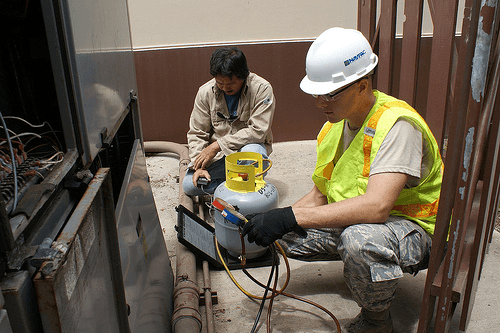
To master the cooling and heating sector, people have to undertake particular training and get relevant certifications that validate their abilities and knowledge. Typically, aspiring HVAC specialists start with a high college diploma or matching, followed by professional training or an associate level in heating and cooling technology. These programs typically cover fundamental concepts, system layout, and repair work methods.
Along with formal education and learning, obtaining certifications from recognized organizations, such as the Epa (EPA) and North American Service Technician Excellence (NATE), is crucial. EPA qualification is required for handling refrigerants, while NATE certification demonstrates proficiency in different a/c subjects.
Hands-on experience through instructions or teaching fellowships better enhances a person's qualifications. Constant education is additionally important, as the HVAC market progresses with brand-new modern technologies and regulations. By satisfying these training and accreditation demands, people position themselves for success in a competitive job market.
Job Paths in the HVAC Sector
With the required training and qualifications in position, people can check out numerous career paths within the cooling and heating market. Typical functions include cooling and heating technician, that carries out fixings, installation, and upkeep of heating, air flow, and cooling systems. One more option is coming to be an a/c designer, focusing on system design and performance, typically calling for advanced education and learning in design principles.
In addition, individuals may pursue sales duties, focusing on heating and cooling services and products, which require strong communication abilities and technological knowledge. Some might pick to progress into administration positions, managing groups and projects while guaranteeing conformity with industry standards. Chances exist in power auditing, where experts analyze energy use in buildings and advise enhancements. Each course uses special difficulties and incentives, catering to varied ability sets and rate of interests within the cooling and heating field.
Task Prospects and Employment Opportunities
The a/c market boasts a solid demand for qualified professionals, driven by the ongoing demand for climate control systems in property, commercial, and commercial settings. As power performance and environmental sustainability come to be significantly vital, the demand for experienced service technicians remains to increase. Task leads are particularly beneficial for those with specialized training and accreditations, as companies seek people with the current understanding in energy-efficient innovations and clever HVAC visit here systems.
According to industry records, the employment of cooling and heating technicians is projected to expand significantly over the following decade, showing the industry's durability also throughout economic changes. Furthermore, as older systems call for replacement and brand-new structures arise, opportunities include both experienced specialists and novices. Lots of cooling and heating firms are likewise expanding their services, creating further openings (HVAC Jobs Only). Overall, people entering the HVAC area can expect a durable work market, with sufficient possibilities for development and stability
Tips for Progressing Your Cooling And Heating Occupation
As experts navigate their HVAC find more professions, pursuing constant education and learning and specialized training can substantially enhance their improvement prospects. Engaging in qualification programs, such as those supplied by North American Professional Quality (NATE) or the Refrigeration Solution Engineers Society (RSES), can substantially enhance a specialist's credibility and understanding base. Networking within the market is equally necessary; attending trade convention, workshops, and neighborhood market occasions can open up doors to new possibilities and collaborations.
Additionally, acquiring experience in varied areas, such as industrial systems or power performance modern technologies, permits professionals to become versatile professionals - HVACJobsOnly. Creating soft abilities, including interaction and analytic capabilities, is essential for those going for supervisory or administration duties. Ultimately, remaining informed regarding market fads and arising modern technologies warranties that a/c experts continue to be affordable in a swiftly advancing field, positioning them for long-lasting career success
Frequently Asked Concerns
What Is the Typical Salary for Cooling And Heating Technicians?
The typical wage for a/c technicians differs by area click resources and experience but normally ranges between $40,000 and $60,000 each year. Factors such as qualifications and specialization can considerably affect making potential in this field.
Are There Specialized Heating And Cooling Area to Take Into Consideration?
Yes, there are customized heating and cooling areas, including household, business, and commercial heating and cooling, along with areas like refrigeration, energy monitoring, and interior air high quality. Each field of expertise provides unique skills and job opportunities within the market.
How Can I Discover Heating And Cooling Work Openings?
To locate heating and cooling job openings, individuals ought to explore on-line task boards, firm sites, industry-specific discussion forums, and neighborhood trade institutions. Connecting with professionals in the field can additionally reveal hidden possibilities and potential job leads.
What Tools Are Crucial for Cooling And Heating Work?
Crucial tools for HVAC work include multimeters, refrigerant evaluates, pipeline wrenches, vacuum pumps, and leakage detectors. These instruments make it possible for technicians to identify, repair, and maintain air, ventilation, and heating conditioning systems efficiently and successfully.
Can I Operate In Cooling And Heating Without Certification?
Yes, one can function in HVAC without accreditation, although chances may be restricted. Numerous employers like licensed prospects, and people without certification might discover it challenging to advance in their jobs or access particular task placements.
To excel in the Cooling and heating industry, people need to undergo details training and obtain relevant accreditations that validate their skills and expertise. Generally, striving Heating and cooling professionals begin with a high institution diploma or matching, followed by occupation training or an associate level in HVAC modern technology. With the required training and accreditations in area, individuals can discover various profession courses within the A/c industry. According to industry records, the employment of HVAC professionals is projected to expand substantially over the next decade, reflecting the sector's strength also throughout financial fluctuations. Yes, there are specific HVAC areas, including residential, commercial, and industrial A/c, as well as locations like refrigeration, power management, and indoor air high quality.